

The Bottom Line
- Connecting an AI agent to Kafka via MCP provides data access, but it does not provide transactional authority.
- An LLM chat transcript is conversational evidence, not a durable audit record.
- Safe autonomous action requires a Sovereign Decision Fabric: a persistent record that binds the source event, policy version, and idempotency key to the final effect.
A Kafka MCP server exposes operational evidence through a controlled interface. A durable agent needs a decision record that binds the source event and its partition and offset to the policy version, evaluation result, attempted effect, idempotency key, review state, and replay path. Kafka preserves evidence and MCP constrains tool access, but neither carries authority across failure, delay, or policy change. Human accountability depends on an approving person being able to inspect and challenge that durable chain before and after action.
The hard architectural question is therefore not whether an agent can read Kafka. It is where authority persists when the model call has ended, a worker has failed, or a reviewer must decide whether changed facts alter a prior approval. A governed agent runtime answers that question with durable decision state. Treating connection as control leaves it unanswered.
A correct answer can still execute an unwanted action
An agent can classify an event correctly and still cause an unsafe effect. The problem appears when an autonomous process is treated as one model invocation rather than a process that continues through failures, waiting periods, and changed authority.
Consider a delivery exception arriving on a Kafka topic. An agent reads the record, retrieves an applicable rule, and prepares a downstream hold. The worker fails after sending the request but before recording the response. A replacement worker retries. During a review, the governing rule changes. Each operation may look reasonable when inspected alone. Together, they can create a duplicate effect or carry an expired approval into a new policy context.
The fault is not necessarily poor model reasoning. It is an absent contract between a decision and an external effect. Temporal's guidance on activity idempotency describes the basic failure mode: an activity can complete externally even when the worker fails before reporting completion, so retries must tolerate duplicate execution. A model transcript cannot solve that distributed-systems problem.
This matters most when an action changes a person's options, a physical process, access to information, or the state of an investigation. In those cases, a plausible answer is not enough. The system must show the evidence that authorised the act, the authority in force at that moment, and whether the effect happened once.
While the stakes are highest in defense, the underlying architectural failure applies just as strictly to financial trading or automated logistics.
The ICRC's guidance on artificial intelligence in the military domain states that international humanitarian law applies to AI-enabled decision support as well as autonomous weapon systems. It also makes a simple point with broad relevance: technical capability cannot repair an unlawful method of decision-making. A tool call with a confirmation dialog does not by itself establish responsible human judgement.
Chat history cannot govern an action
A chat history is evidence of a conversation. It is not a governing record for an executionable action.
It can show what text reached a model and what text came back. It usually cannot prove whether a downstream request completed before a process stopped. It does not inherently name the exact Kafka offset used as evidence. It cannot tell a later reviewer whether an approval was still valid after a policy revision, or whether replay will repeat a call that already succeeded.
That distinction is visible in Databricks' durable-agent architecture, which separates control-flow history from application state used for evidence, reviews, retries, policy, and audit. The important lesson is not a preference for a particular stack. Recoverable execution needs a record that survives the worker and gives a later process enough state to determine what may happen next.
Human moral agency sits at this boundary. Someone who approves, denies, or delegates an effect must be able to identify what was approved, under which rule, and on what factual basis. If the factual basis changes during a wait, the system must make that change legible before it presents the approval as operative. Otherwise the human role becomes ceremonial: visible in the workflow, but detached from the decision that caused the effect.
Research from CSET on trusted partners for military AI places auditability, explainability, reliability, and responsiveness among the conditions for calibrated reliance. Those conditions point to records, not merely interfaces. A reviewer needs to examine a concrete chain of evidence and state, then decide whether to ratify, reject, or reopen it.
Kafka supplies evidence rather than permission
Kafka can provide a defensible reference to what an agent observed. It cannot decide what that observation permits.
Apache Kafka's documentation describes durable records organised in topics and ordered partitions, with consumer progress represented through offsets. A decision can therefore point to a specific event in a partition at an offset, rather than asserting that it used "live data." That reference can include a schema version, record timestamp, producer identity where available, and the consumer position associated with the decision.
Those fields give an after-action reviewer something precise to test. Did the decision use the intended event? Did later records contradict it before the effect was sent? Did the reader use a schema that the policy permitted? The answer should be recoverable without asking a model to recreate its reasoning from a summary.
Freshness is a policy decision, not a model intuition. A low-consequence notification may tolerate older evidence. An action that changes an entitlement, alters a physical process, or shapes a use-of-force decision may demand a new evaluation when relevant facts change. The acceptable window belongs in policy because it expresses who may accept which risk, under what conditions.
Current operational facts still matter. Databricks' analysis of LTAP workloads argues that agents need both live transactional facts and wider analytical context. That does not require exporting every operational record into a single analytical store before acting. It requires preserving the provenance and freshness of the evidence actually used.
This is the proper role of Kafka in a governed design: a durable source of operational evidence. Permission belongs elsewhere, in a decision process that can compare evidence with the applicable policy and record the result.
Can AI agents act safely with only MCP tools?
No. MCP tools can constrain and make visible an interaction, but they do not provide durable authority for an action-bearing process.
The Model Context Protocol introduction defines MCP as a standard for connecting AI applications to external systems, data sources, tools, and workflows. That is a meaningful boundary. It makes capabilities explicit and lets an application present a limited set of operations to a model.
The protocol's own tools specification says tools are model-controlled and recommends clear exposure of tools, invocation indicators, confirmation prompts, and a human ability to deny calls. These are sensible interface safeguards. They do not specify a durable run boundary, a retry contract, a policy-adoption rule, or an audit record that connects a confirmation to the evidence considered.
An approval prompt can answer, "May this call be made now?" It cannot on its own answer, "Was the underlying evidence still valid after a two-hour delay?" Nor can it tell a replacement worker whether a previous attempt already changed the external system. Those questions require decision state that outlives the user interface and the model session.
The UK's National Cyber Security Centre guidance on agentic AI recommends proportionate autonomy, sandboxing, active oversight, observability, attribution, incident response, and emergency shutdown controls. A tool surface may contribute to several of those controls. It cannot carry all of them. Control has to persist through the life of the decision.
Observation should be separate from authority
The safer Kafka MCP starting point is a separate, read-only observation service. It reduces the risk that an agent's ability to inspect a broker becomes an unbounded ability to alter it.
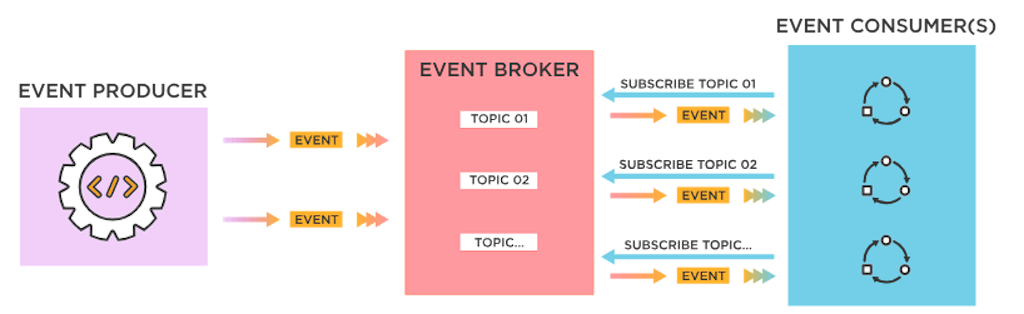
A separate service for Kafka observation makes this boundary concrete. KafScale's Kafka MCP service is one example: it exposes observability around topics, consumer groups, offsets, configurations, and metrics through a separate service. Read access does not make a system safe, but it produces a useful separation. The agent may gather evidence without receiving write authority over the broker or the systems represented by its events.
That separation should remain visible in the architecture. An observation service answers questions such as whether a consumer is behind, which records were present, or whether a configuration differs from expectation. A governed runtime answers a different question: whether a proposed effect is allowed on the basis of that evidence.
Conflating the two creates an avoidable category error. The first concern is information access and broker attack surface. The second is authority over external consequences. They can share identifiers and audit trails, but they should not share an assumption that a tool invocation is a decision. This same operational distinction between broker visibility and authority is central to vendor-neutral Kafka operations.
The decision object is where governance lives
The durable decision object is the persistent record that binds evidence, authority, review, and effect status for one proposed action. It is the unit a system must replay and a person must be able to examine. This is the operational consequence of treating an AI fabric as a runtime for explainable decisions, rather than as a shared context layer.
At a minimum, it needs the following fields:
decision_id, a stable identifier for the proposed action.source_event_offsets, including topic, partition, offset, schema version, and any evidence timestamp.policy_versionandeval_gate, recording the rule set and result that allowed, blocked, or escalated the proposal.tool_invocation_idandattempted_effect, linking the decision to the request made through an interface or adapter.idempotency_keyandeffect_status, allowing a retry to determine whether an external effect already occurred.review_state, including the reviewer decision, time, and the evidence and policy version presented for review.failure_detailsandreplay_pointer, allowing recovery to start from known state rather than a reconstructed conversation.
The record does not remove judgement. It makes judgement locatable. A policy engine can evaluate rules deterministically where rules are defined. A model can classify ambiguous material or propose options. A person can approve a bounded effect. Each contribution has a different evidentiary status, and the decision object should preserve that difference.
This record also establishes a practical revocation point. When policy changes, a runtime can re-evaluate pending decisions against the new version, invalidate approvals that no longer meet the rule, and retain the old result as historical evidence. Without this state, revocation becomes a best-effort instruction to distributed workers.
Control placement determines what can be proven
The architecture choice is fundamentally a choice about where control sits in relation to live evidence and external effects. Three broad patterns make the difference clear.
No pattern removes the need for judgement. The third pattern makes the judgement reviewable under failure. Its cost is architectural discipline: stable identifiers, policy versioning, effect adapters with idempotency, and a workflow model that can wait without forgetting. Those are real limits, and they must be owned before autonomy expands.
NATO's revised AI strategy names lawfulness, responsibility and accountability, explainability and traceability, reliability, governability, and bias mitigation as principles for responsible use. The implications for ordinary operational systems are direct. Traceability is not a report generated after the fact. It is a property of the decision path at the time it acts.
Accountability must survive the replay
The after-action question is plain: can a reviewer reproduce the basis for the effect without trusting a model's recollection? If not, the human who appears in the approval chain cannot fully own the decision.
Before action, the same object gives the approving human grounds to challenge the proposal: the source offset, the policy version, facts that changed since evaluation, prior attempts, and the consequence of replay. Each question tests whether the approval concerns the present action rather than a recommendation detached from its conditions. Without those answers, an approval is an acknowledgement of an interface prompt, not an accountable exercise of judgement.
The UN Secretary-General's report on lethal autonomous weapons systems keeps human responsibility and compliance with international law at the centre of the policy debate. SIPRI's comparison of autonomous weapons and AI-enabled decision support likewise shows that decision-support systems can reshape human roles even when they do not independently select or engage targets. The distinction matters because a nominal human check can mask a system that has already narrowed the practical space for judgement.
That risk also exists in less extreme settings. If a reviewer sees only a recommendation and a button, the system has hidden the source event, its recency, the rule version, prior attempts, and the consequences of approval. Human-in-the-loop then means human at the interface, not human accountable for an intelligible decision.
Kafka and MCP remain useful parts of the answer. Kafka can preserve the operational evidence. MCP can expose an inspectable and constrained means of access. But an autonomous effect should be defendable only when its runtime can demonstrate the chain from evidence to policy to review to idempotent execution. The position worth defending is demanding but necessary: no action should claim human accountability if its governing state cannot survive a replay.
About Scalytics
Our founding team created Apache Wayang, the federated execution framework that lets computation run where the data lives and dramatically reduces unnecessary data movement.
We also built and maintain kafSCALE, a high-performance, Kafka-compatible streaming platform designed for Kubernetes and object storage. It delivers elastic scale without broker complexity or lock-in.
Our mission: Keep data in place. Bring compute to the data. Enable secure, sovereign, and production-ready AI operations.


